Flip 2 Coins Simultaneously
Toss 2 fair coins at the same time with realistic 3D rotational physics. Explore joint outcome probabilities and solve 2-coin dispute scenarios.
The 4 Combinatorial States of 2 Simultaneous Coins
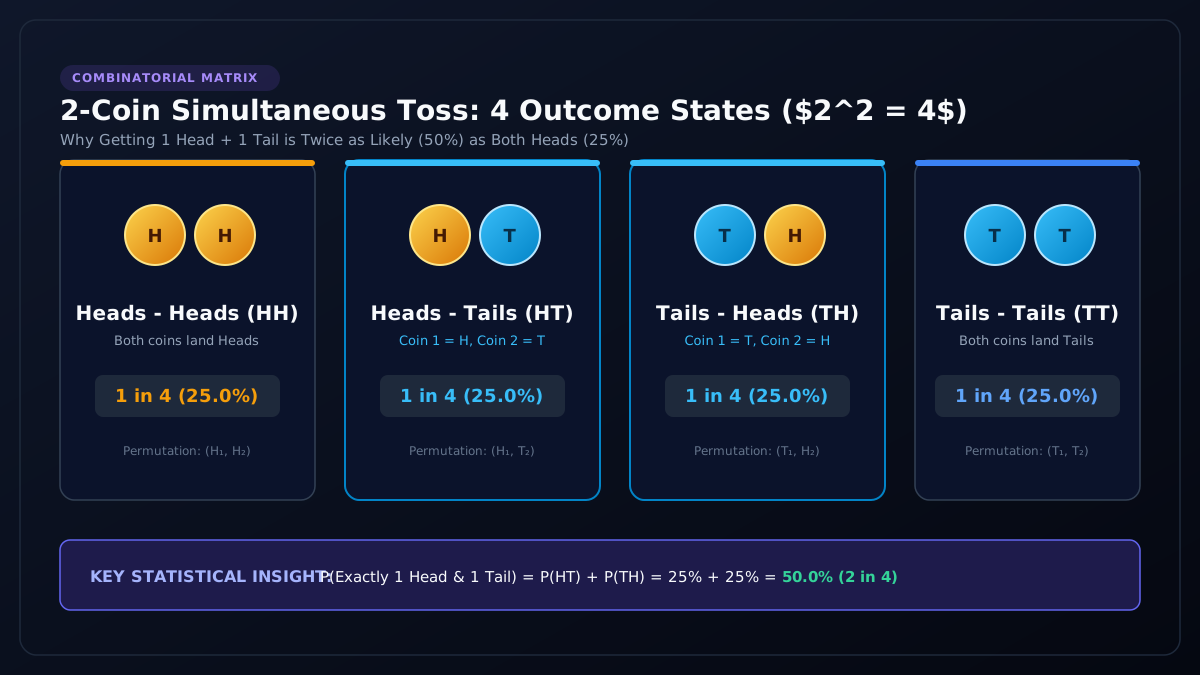
The 4 Joint Permutations of 2 Coins ($2^2 = 4$)
Independent probability states and occurrence ratios:
Explore Higher-Count Simultaneous Multi-Coin Silos
Toss multiple coins simultaneously with parallel 3D physics: jump to the 5 coins sandbox, scale up to the 10 coins simultaneous flipper, or toss a full tray with grab 50 coins online.
Frequently Asked Questions
What are the 4 possible outcomes when flipping 2 coins?
When flipping 2 fair coins simultaneously, there are 2^2 = 4 equally likely permutations: (Heads, Heads), (Heads, Tails), (Tails, Heads), and (Tails, Tails). Each specific combination has a 25% (1/4) chance.
Why is getting 1 Head and 1 Tail twice as likely (50%) as getting 2 Heads (25%)?
Because order matters in independent trials: you can achieve one head and one tail in two distinct ways—either Coin 1 is Heads and Coin 2 is Tails (HT), or Coin 1 is Tails and Coin 2 is Heads (TH). Thus, P(1 Head, 1 Tail) = 2/4 = 50.00%, whereas P(2 Heads) = 1/4 = 25.00%.
Is flipping 2 coins at once identical to flipping 1 coin twice in a row?
Yes, mathematically. In probability theory, simultaneous trials with independent coins produce the identical joint probability distribution as sequential trials of a single coin.